Dopelist • Design Exercise • 2026

Reframing Content Discovery and Creation

Explored a new structure for discovery, resurfacing, and content creation to reduce confusion and improve engagement in a content-driven app

Content Discovery

Interaction Design

Information Architecture

Context

This was a design exercise for Dopelist, focused on improving the Home experience and the “Saved by Friends” feature.

The goal was to increase engagement and reduce confusion in a product that combines content discovery, saving, and social interaction.

The challenge was to rethink how users navigate between discovering new content, managing their own collections, and creating new items.

Problem

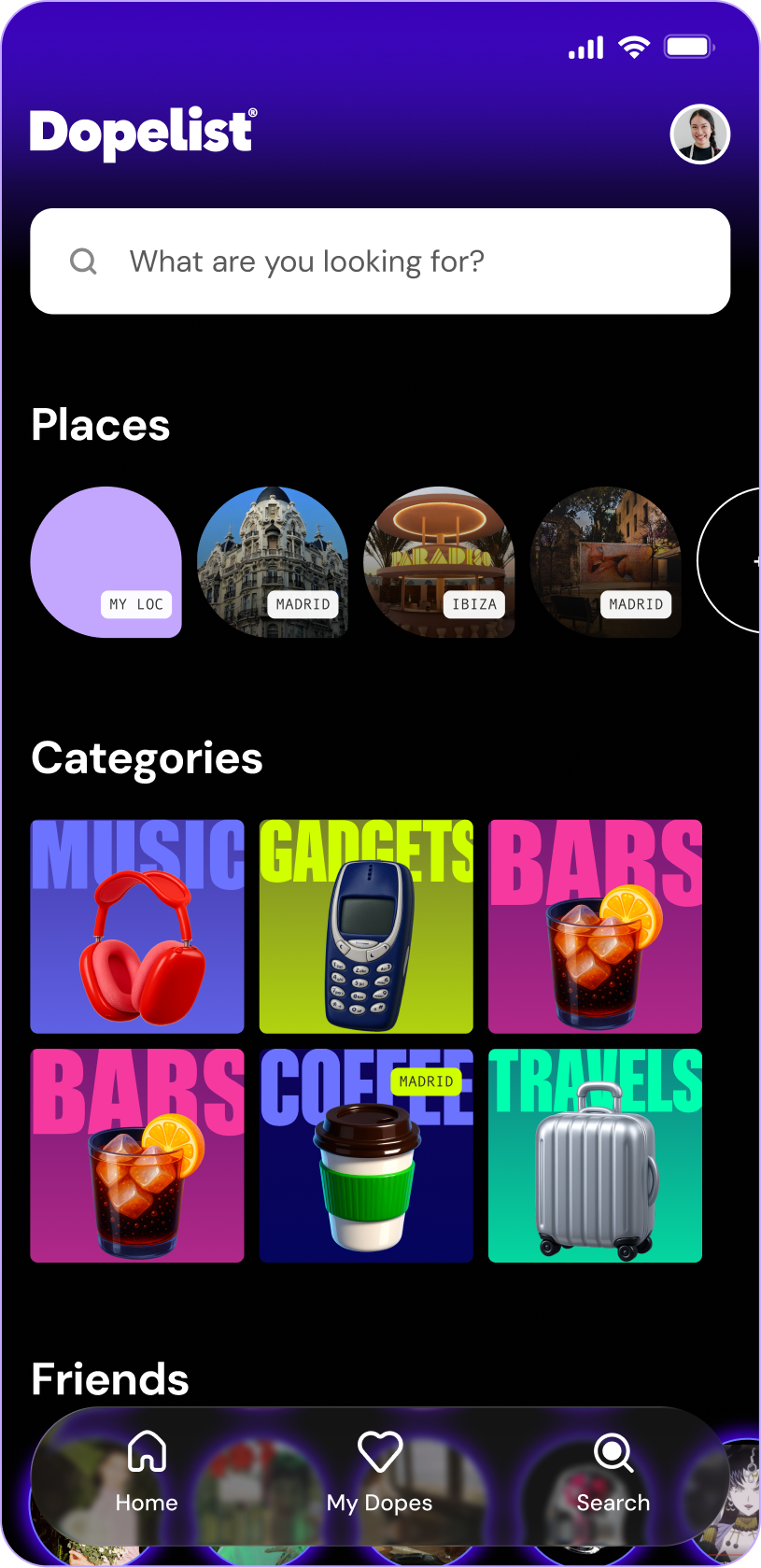
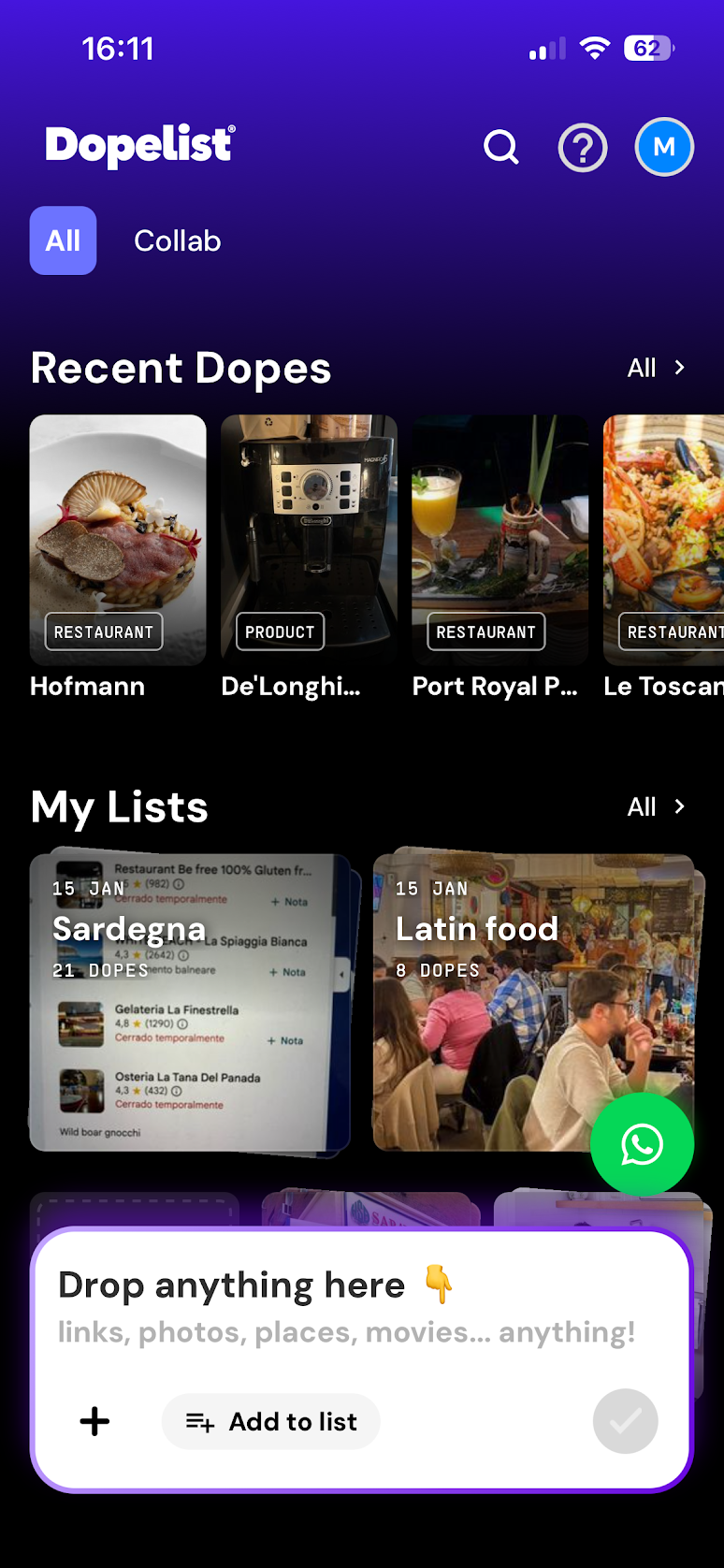
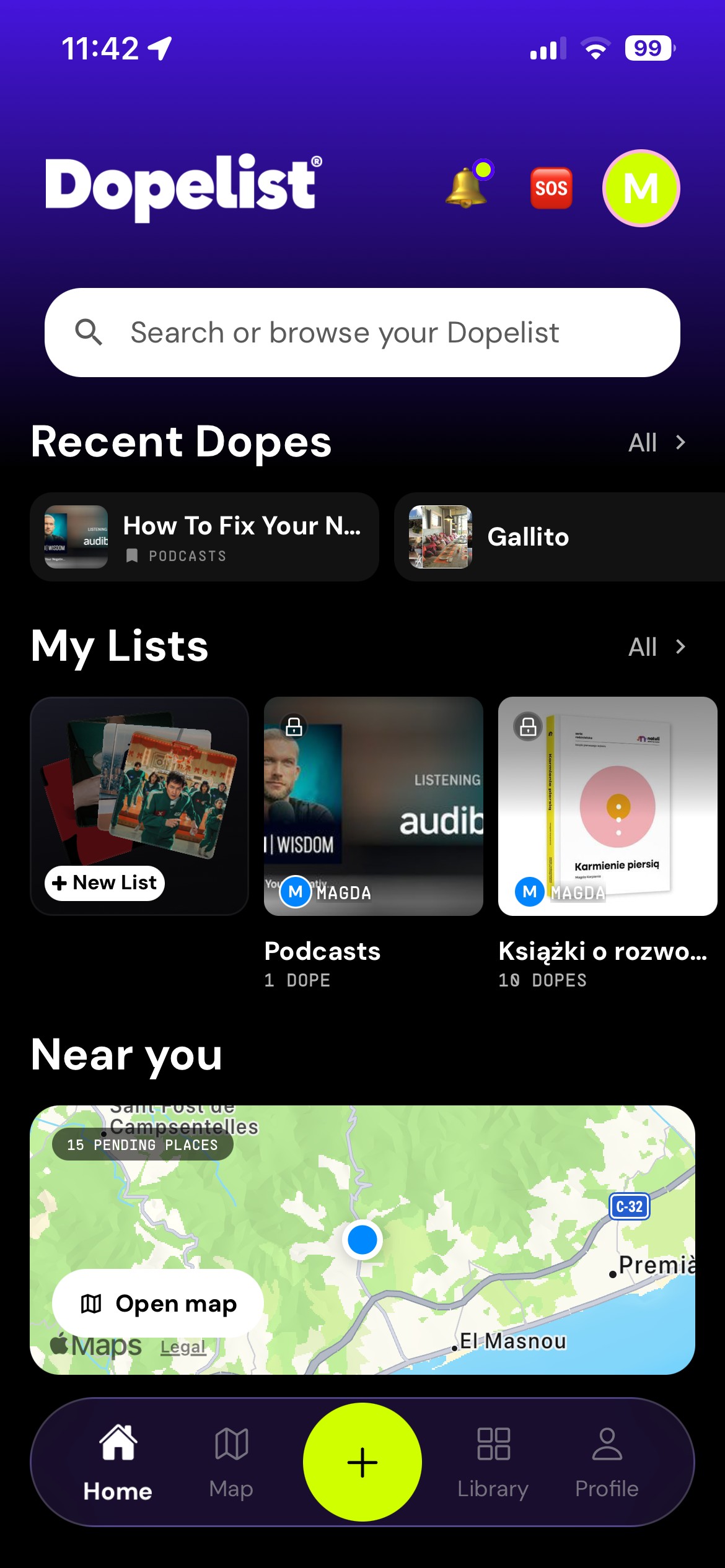
The current experience mixed multiple mental models into a single space.

Key issues:

  • Home mixed discovery, personal content, and creation in one place
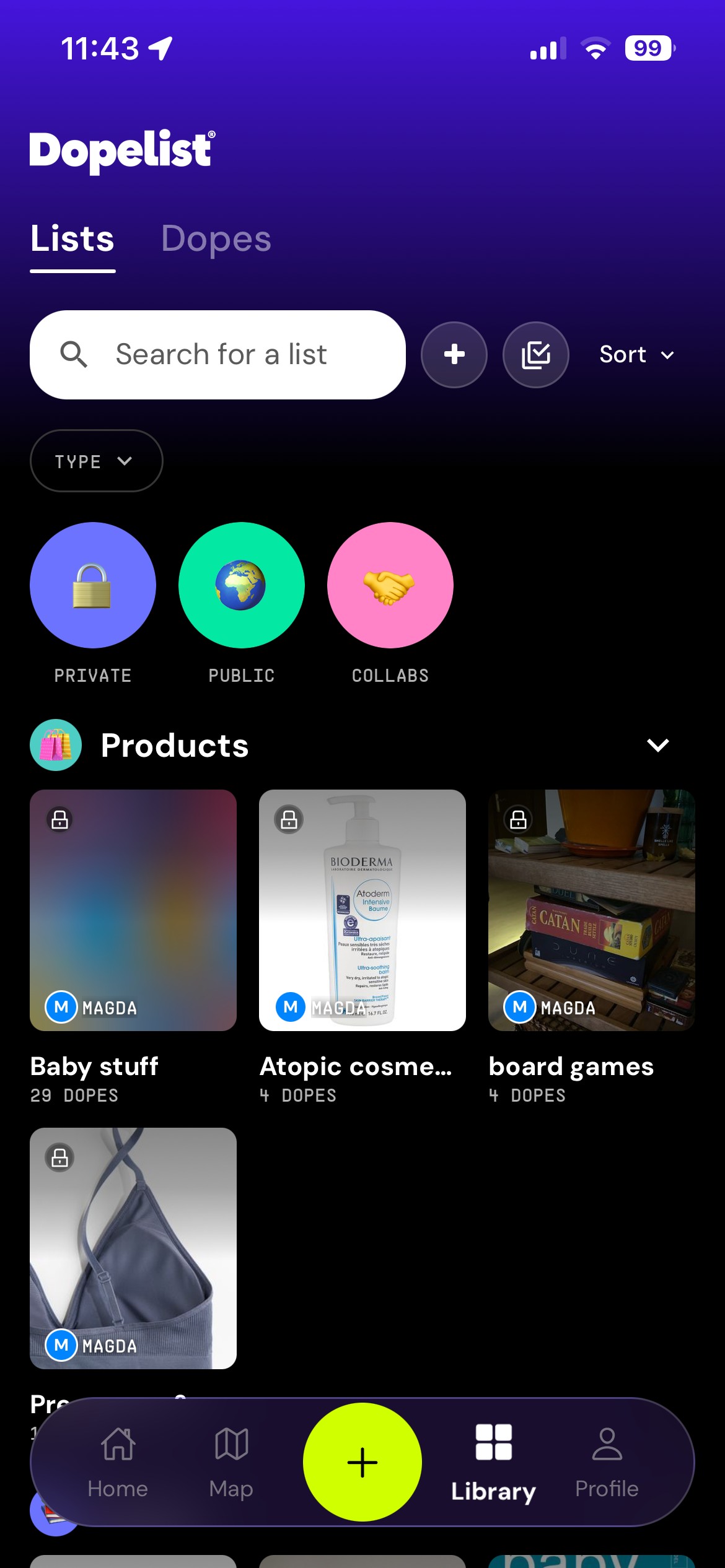
  • Discovery and ownership competed for attention
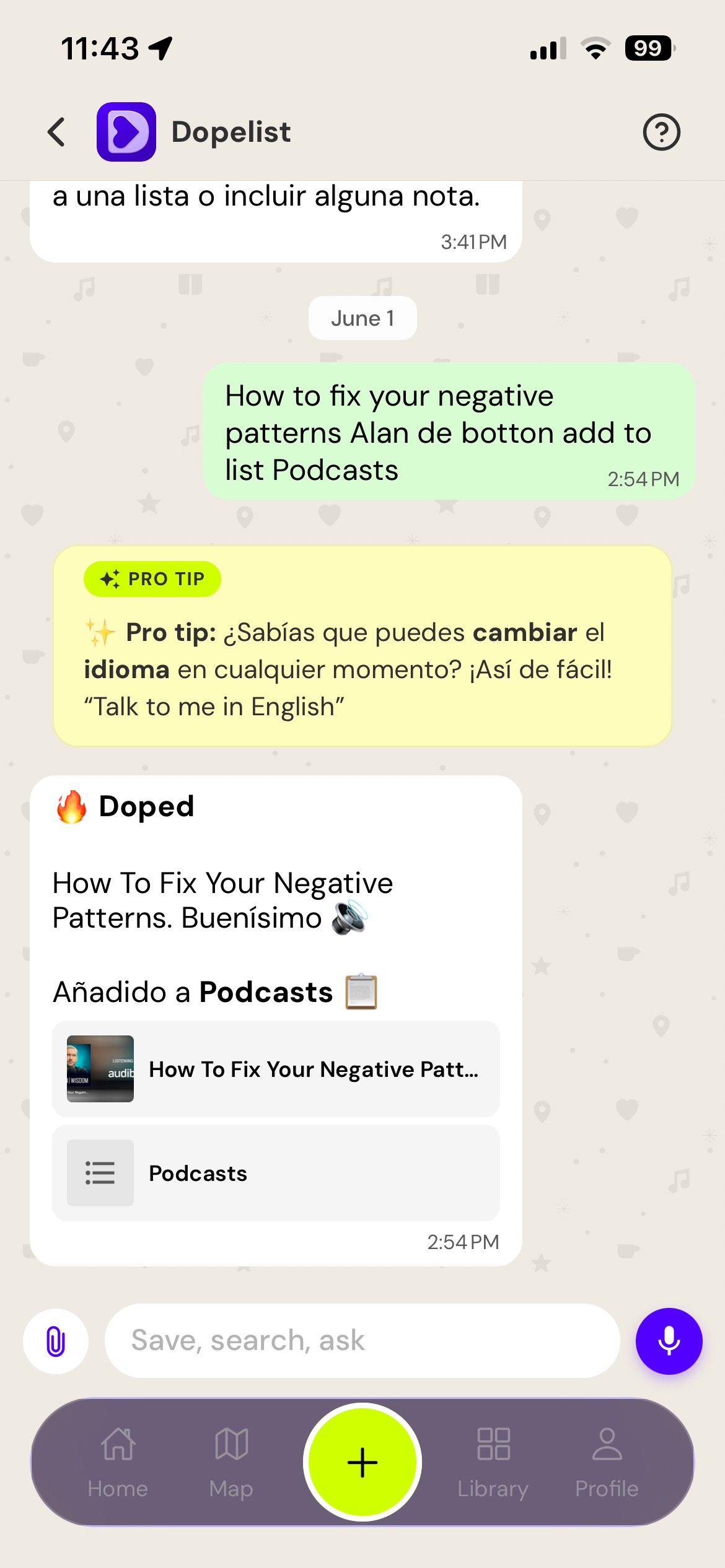
  • The existing creation flow was not designed for longer or AI-assisted interactions

This created confusion and reduced clarity in how users interact with the product.
[image]

Approach & Decisions

I approached the problem by separating core user intents: discovery, ownership, and creation.

Key decisions:

Structure:

  • Split the experience into clearer areas (Home, personal space, search)
  • Reduced cognitive load by assigning a primary role to each surface

Discovery:

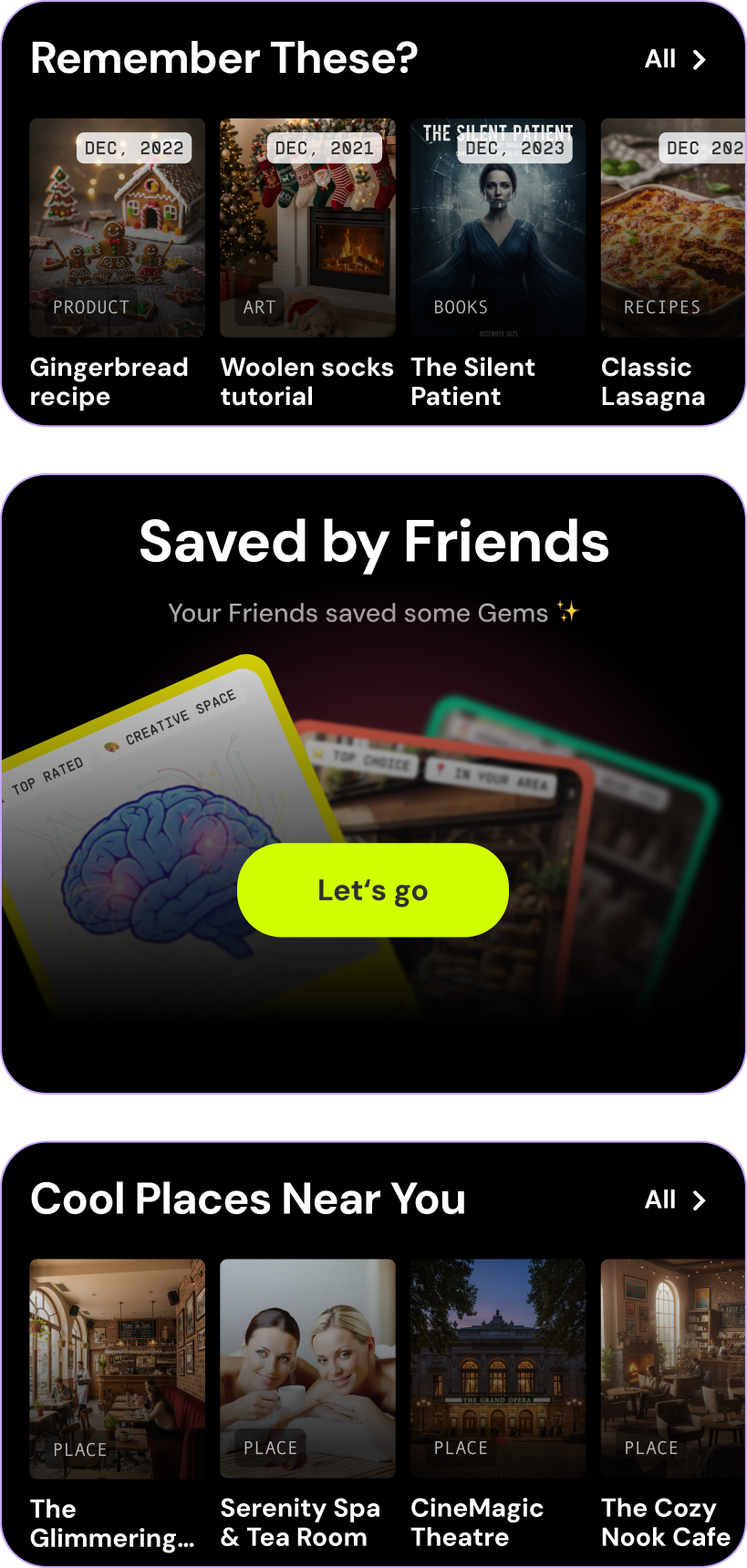
  • Introduced resurfacing patterns (e.g. “Remember these?”, “Saved by friends”) to bring back relevant content
  • Prioritized social proof and contextual recommendations to support engagement 

Creation:

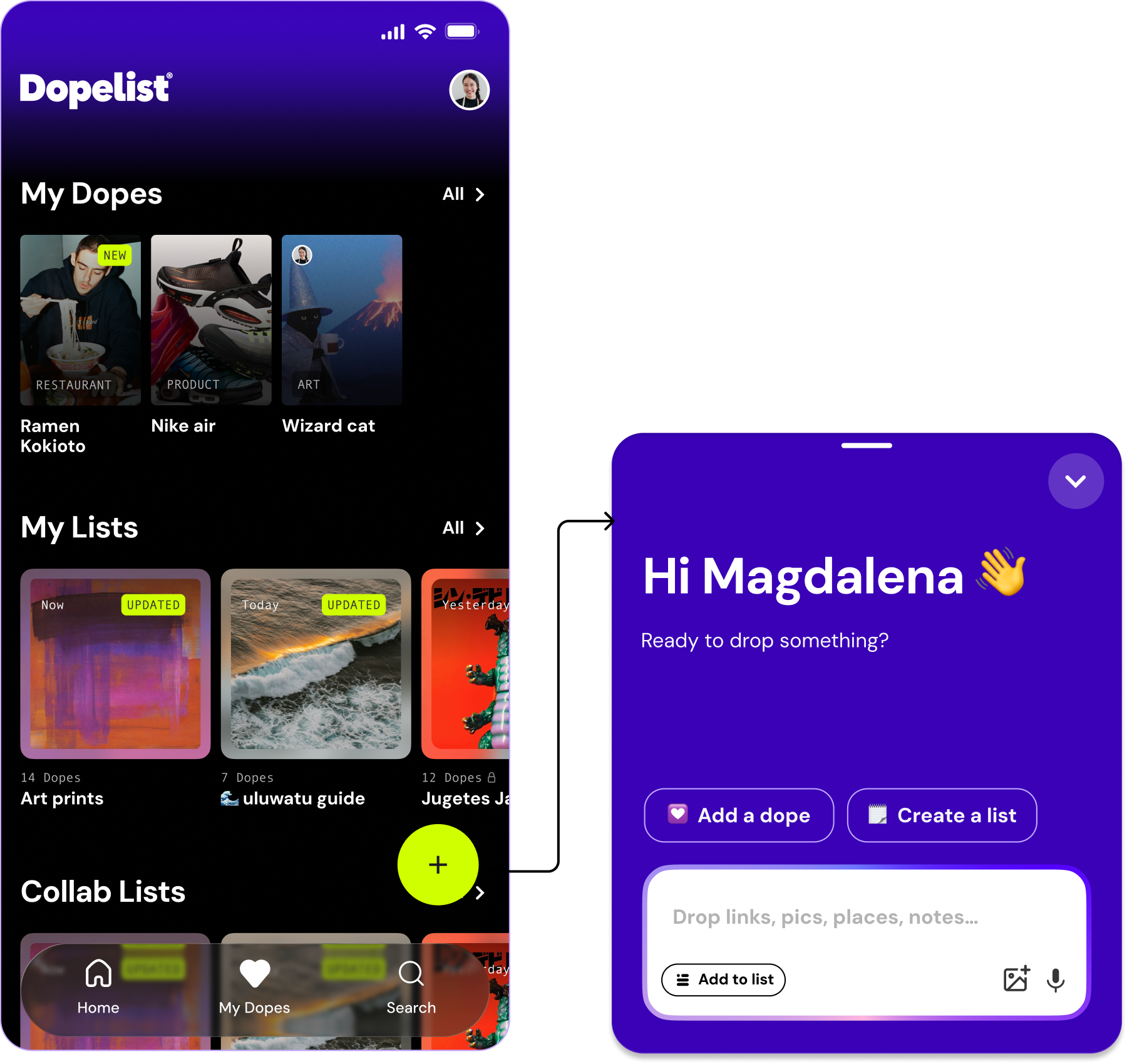
  • Consolidated creation into a single, intentional entry point
  • Designed an expandable composer to support multi-step and AI-assisted flows
  • Allowed users to continue browsing while creation is in progress 

Interaction model:

  • Designed a swipe-based interaction for lightweight decision-making (save vs skip)
  • Reduced friction by removing unnecessary actions (e.g. “like” without long-term value)
  • Avoided heavy onboarding, enabling users to learn through interaction 

Content system:

- Designed card anatomy to surface key signals first (tags, social proof)

- Made details expandable to balance speed and depth

Outcome

The proposal resulted in:

  • A clearer separation between discovery and personal content
  • A more structured and scalable creation flow
  • Improved visibility of social and contextual signals
  • A more engaging and lightweight interaction model

This exercise demonstrates my approach to structuring complex product spaces and designing scalable interaction systems.

After completing the exercise, I reviewed the product’s later evolution.

Several principles explored in this proposal (e.g. clearer separation of discovery and ownership, more structured creation flows, and stronger use of social signals) align with how the product has since evolved.

Magdalena Mrowiec

Dopelist • Design Exercise • 2026

Reframing Content Discovery and Creation

Explored a new structure for discovery, resurfacing, and content creation to reduce confusion and improve engagement in a content-driven app

Content Discovery

Interaction Design

Information Architecture

Context

This was a design exercise for Dopelist, focused on improving the Home experience and the “Saved by Friends” feature.

The goal was to increase engagement and reduce confusion in a product that combines content discovery, saving, and social interaction.

The challenge was to rethink how users navigate between discovering new content, managing their own collections, and creating new items.

Problem

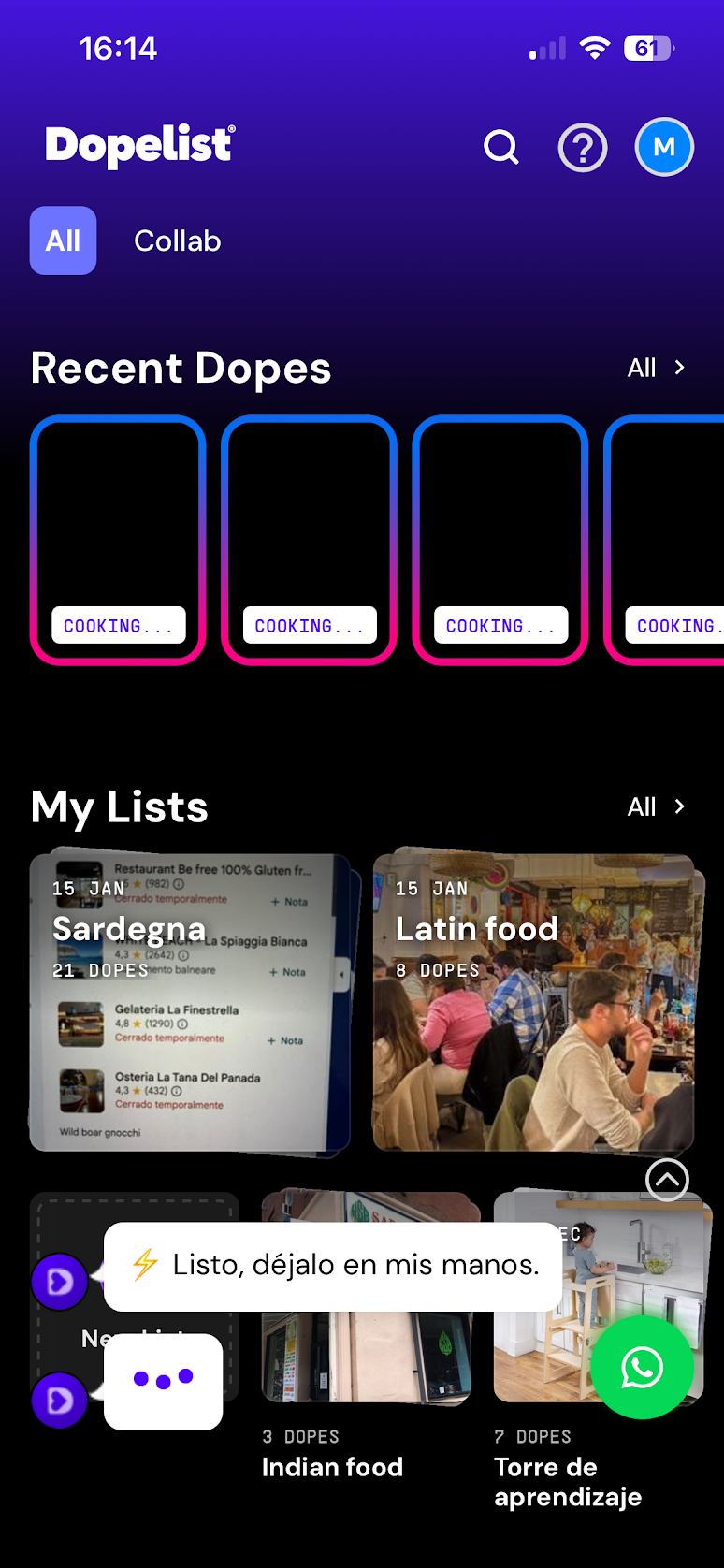
The current experience mixed multiple mental models into a single space.

Key issues:

  • Home mixed discovery, personal content, and creation in one place
  • Discovery and ownership competed for attention
  • The existing creation flow was not designed for longer or AI-assisted interactions

This created confusion and reduced clarity in how users interact with the product.
[image]

Approach & Decisions

I approached the problem by separating core user intents: discovery, ownership, and creation.

Key decisions:

Structure:

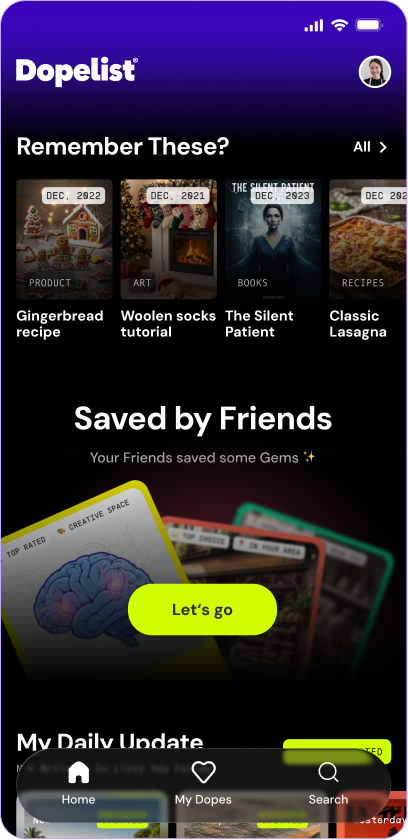
  • Split the experience into clearer areas (Home, personal space, search)
  • Reduced cognitive load by assigning a primary role to each surface
Discovery:

  • Introduced resurfacing patterns (e.g. “Remember these?”, “Saved by friends”) to bring back relevant content
  • Prioritized social proof and contextual recommendations to support engagement 

Creation:

  • Consolidated creation into a single, intentional entry point
  • Designed an expandable composer to support multi-step and AI-assisted flows
  • Allowed users to continue browsing while creation is in progress 

Interaction model:

  • Designed a swipe-based interaction for lightweight decision-making (save vs skip)
  • Reduced friction by removing unnecessary actions (e.g. “like” without long-term value)
  • Avoided heavy onboarding, enabling users to learn through interaction 

Content system:

- Designed card anatomy to surface key signals first (tags, social proof)

- Made details expandable to balance speed and depth

Outcome

The proposal resulted in:

  • A clearer separation between discovery and personal content
  • A more structured and scalable creation flow
  • Improved visibility of social and contextual signals
  • A more engaging and lightweight interaction model

This exercise demonstrates my approach to structuring complex product spaces and designing scalable interaction systems.

After completing the exercise, I reviewed the product’s later evolution.

Several principles explored in this proposal (e.g. clearer separation of discovery and ownership, more structured creation flows, and stronger use of social signals) align with how the product has since evolved.

Ongoing Order Experience

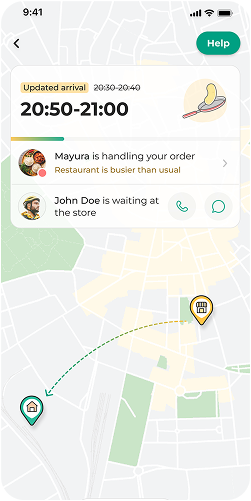
Redesigned the store card to balance increasing business demands (promotions, loyalty, trust signals) with usability, reducing visual clutter and improving scalability.

See case study →

Magdalena Mrowiec

Dopelist • Design Exercise • 2026

Reframing Content Discovery and Creation

Explored a new structure for discovery, resurfacing, and content creation to reduce confusion and improve engagement in a content-driven app

Content Discovery

Interaction Design

Information Architecture

Context

This was a design exercise for Dopelist, focused on improving the Home experience and the “Saved by Friends” feature.

The goal was to increase engagement and reduce confusion in a product that combines content discovery, saving, and social interaction.

The challenge was to rethink how users navigate between discovering new content, managing their own collections, and creating new items.

Problem

The current experience mixed multiple mental models into a single space.

Key issues:

  • Home mixed discovery, personal content, and creation in one place
  • Discovery and ownership competed for attention
  • The existing creation flow was not designed for longer or AI-assisted interactions

This created confusion and reduced clarity in how users interact with the product.

[image]

Approach & Decisions

I approached the problem by separating core user intents: discovery, ownership, and creation.

Key decisions:

Structure:

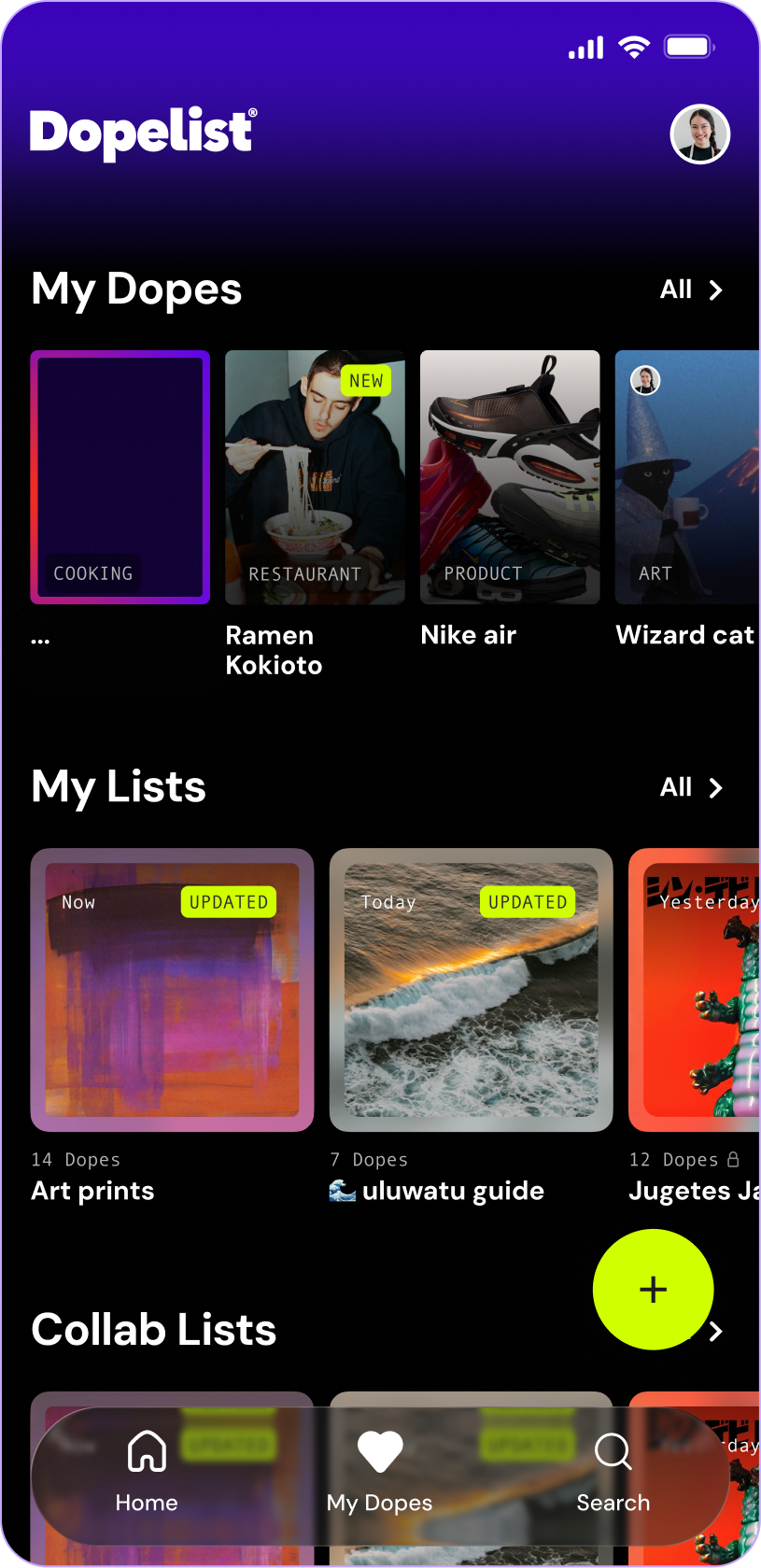
  • Split the experience into clearer areas (Home, personal space, search)
  • Reduced cognitive load by assigning a primary role to each surface
Discovery:

  • Introduced resurfacing patterns (e.g. “Remember these?”, “Saved by friends”) to bring back relevant content
  • Prioritized social proof and contextual recommendations to support engagement 
Creation:

  • Consolidated creation into a single, intentional entry point
  • Designed an expandable composer to support multi-step and AI-assisted flows
  • Allowed users to continue browsing while creation is in progress 
Interaction model:

  • Designed a swipe-based interaction for lightweight decision-making (save vs skip)
  • Reduced friction by removing unnecessary actions (e.g. “like” without long-term value)
  • Avoided heavy onboarding, enabling users to learn through interaction 

Content system:

- Designed card anatomy to surface key signals first (tags, social proof)

- Made details expandable to balance speed and depth

Outcome

The proposal resulted in:

  • A clearer separation between discovery and personal content
  • A more structured and scalable creation flow
  • Improved visibility of social and contextual signals
  • A more engaging and lightweight interaction model

This exercise demonstrates my approach to structuring complex product spaces and designing scalable interaction systems.

After completing the exercise, I reviewed the product’s later evolution.

Several principles explored in this proposal (e.g. clearer separation of discovery and ownership, more structured creation flows, and stronger use of social signals) align with how the product has since evolved.
Magdalena Mrowiec